How to read a one-line diagram
Learn a consistent six-step pass through a simplified U.S. one-line, then cross-check the load against the panel schedule and project documents.
Read articleChapter 22 · 12 pages · No email required
See the complete eight-step method applied across six realistic fault cases - from the first symptom through safe boundaries, evidence, correction, verification, and documentation.
Open it in your browser or keep the PDF for later. No signup is required.
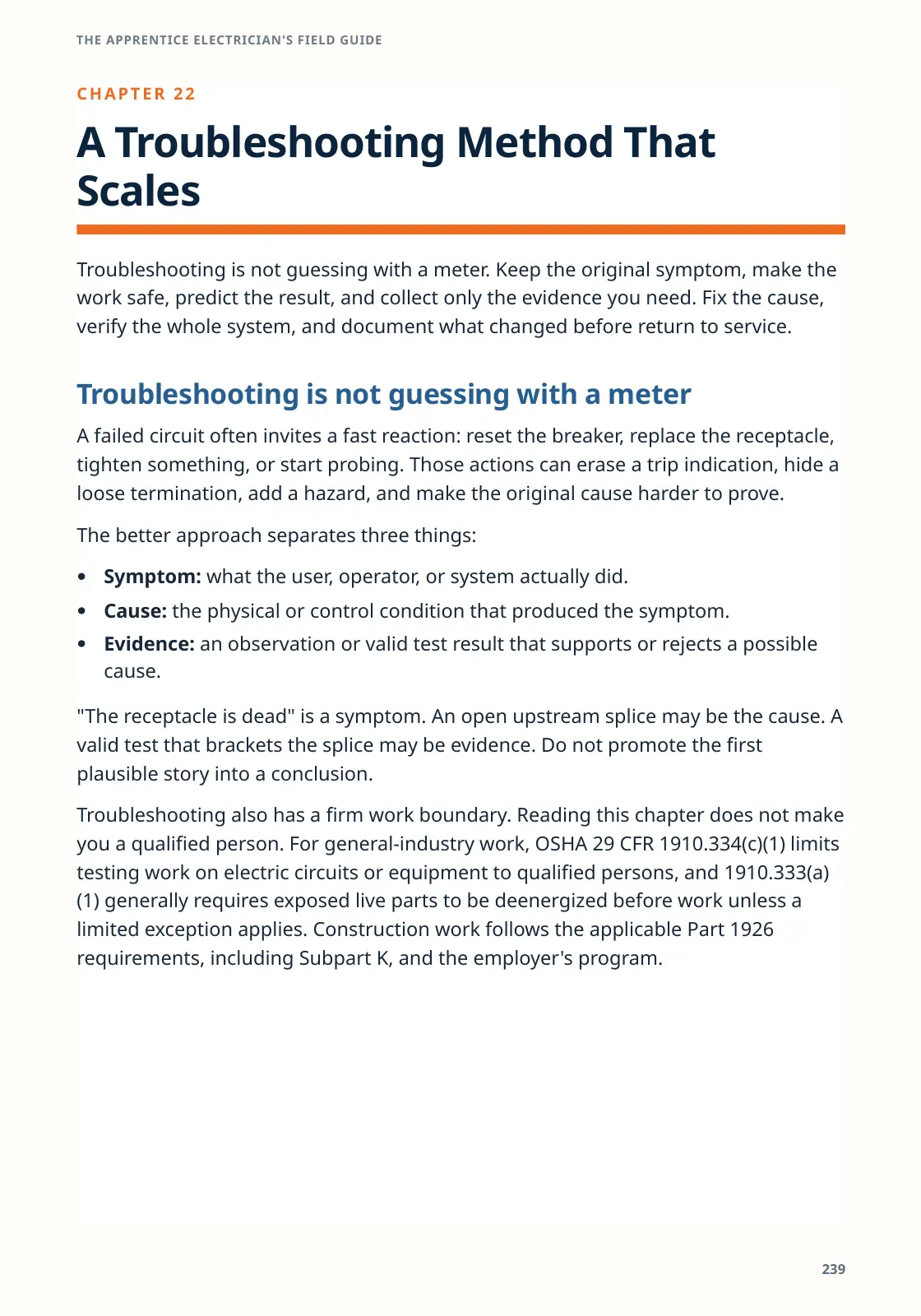 Complete 12-page chapter
What the sample shows
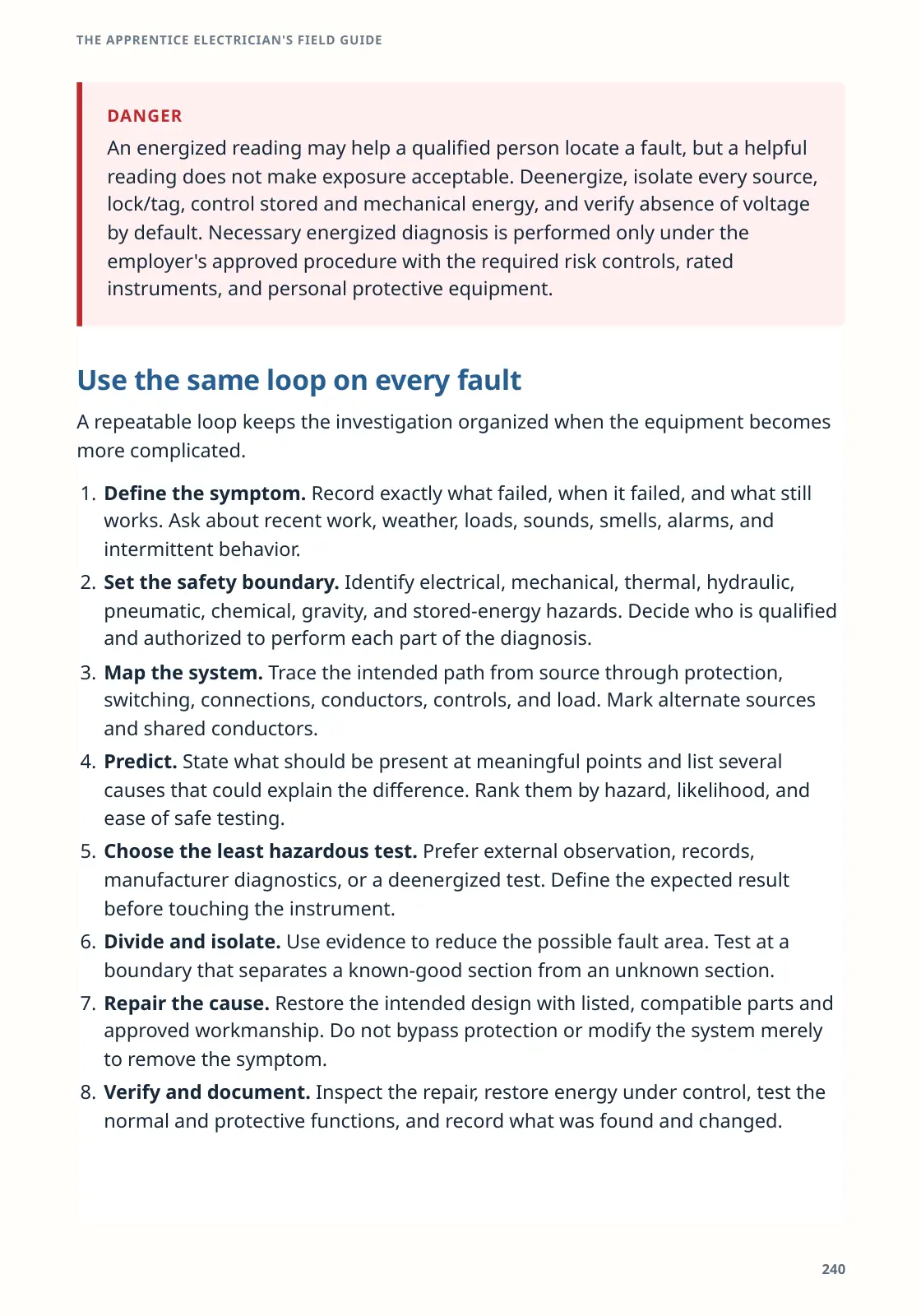
The chapter separates symptoms, possible causes, and evidence before any correction is attempted. It then applies the same eight-step loop across six fault cases so you can see how the reasoning holds together without turning this page into a substitute for the chapter.
Preserve the original symptom and establish what normal operation should look like.
Identify sources, stored energy, exposure, and the controls required for the assigned work.
Choose the next check because it can separate likely causes - not because it is easy to reach.
Confirm the result, restore required safeguards, and leave a record another person can follow.
Pages from the chapter
These are the actual opening pages of the downloadable chapter, not a separate marketing mockup.
Continue with the complete guide
The full 312-page PDF builds from electrical foundations into installation, motors, measurements, troubleshooting, plan reading, and professional practice.